
The Joint Entrance Exam (JEE) is one of the most competitive engineering entrance exams. It is conducted in two stages: JEE Main and JEE Advanced. The exam is the only way to get admission in the top engineering colleges such as IITs, NITs, and IIITs. If you’re preparing for the JEE 2027, this blog will help you to understand the exam structure, syllabus, and preparation strategy.
JEE 2027 Exam Overview
JEE is conducted in two phases:
- JEE Main: Conducted by the National Testing Agency (NTA) for admission to NITs, IIITs, and other engineering colleges.
- JEE Advanced: Conducted by IITs for admission to the Indian Institutes of Technology (IITs). The top 2.5 lakh candidates from the JEE Main are eligible for the JEE Advanced examination.
JEE 2027 Important Dates (Expected)
| Events | Dates (Tentative) |
| JEE Main Session 1 Registration | October 2026 |
| Last Date of Registration | November 2026 |
| Exam Dates JEE Main Session 1 | January 2027 (multiple shifts in CBT mode) |
| Result Session 1 | First Week of February |
| JEE Main Session 2 Registration | February 2027 |
| Last Date of Registration | February 2027 |
| Exam Date JEE Main Session 2 | April 2027 (Multiple Shifts in CBT mode) |
| Result Session 2 | Last week of April 2027 |
| JEE Advanced 2027 Exam Date | May 2027 |
Note: All Dates are indicative and can be changed after notifications from NTA.
JEE 2027 Exam Pattern
JEE Main Pattern
- Mode: Computer-Based Test (CBT)
- Subjects: Physics, Chemistry, Mathematics
- Total Questions: 75 (25 per subject)
- Marks: 300 (each question carries 4 marks)
- Negative Marking: -1 for incorrect answers
- Question types: MCQs and Numerical Value-based Questions
JEE Advanced Pattern
- Conducted in two papers (Paper 1 & Paper 2); attempting both papers is compulsory
- Subjects: Physics, Chemistry, Mathematics
- Question types: MCQs, numerical value, match the following, etc.
- The marking scheme & number of questions vary each year
Eligibility criteria
| Criteria | Requirements |
| Qualification | Passed or appearing in Class 12 with Physics, Chemistry & Mathematics |
| Passing year | Class 12 from 2025, 2026, or 2027 |
| Age limit | No upper age limit for JEE Main |
| Attempts | Maximum 3 consecutive years for JEE Main |
| Min. marks (for NIT admission) | 75% in Class 12 (General); 65% for SC/ST |
| JEE Advanced eligibility | Top 2.5 lakh in JEE Main; max 2 attempts at JEE Advanced |
JEE 2027 Syllabus
The syllabus is primarily based on the Class 11 and Class 12 NCERT curriculum.
Physics
- Mechanics (Laws of Motion, Work, Energy)
- Thermodynamics
- Electrodynamics
- Optics
- Modern Physics
Chemistry
- Physical Chemistry (Mole concept, Thermodynamics, Equilibrium)
- Organic Chemistry (Hydrocarbons, Functional Groups)
- Inorganic Chemistry (Periodic Table, Chemical Bonding, Coordination Compounds)
Mathematics
- Algebra (Quadratic Equations, Sequences)
- Calculus (Limits, Differentiation, Integration)
- Coordinate Geometry
- Trigonometry
- Probability & Statistics
Preparation Tips for JEE 2027
- Start in Class 11, not Class 12. A 2-year head start gives you time to build conceptual clarity, the one thing JEE tests that board exams don’t. Students who rush JEE prep into one year always struggle with Class 11 topics like mechanics and organic chemistry.
- NCERT comes first, always. NCERT is the basis, particularly in chemistry. Before going on to reference books, ensure that you understand every topic at the NCERT level. One of the most typical preparation mistakes is skipping the NCERT textbooks.
- One reference book per subject: H.C. Verma for physics, O.P. Tandon / Arihant for chemistry, and R.D. Sharma for mathematics. Relevant resources give you the right information.
- Daily problem-solving is non-negotiable: JEE is all about applications, not memory. Solve 4-5 hours of targeted problems per day. Pattern recognition requires a significant amount of experience.
- Keep an error notebook:. Every incorrect answer in practice has a cause: a foolish error, a conceptual gap, or formula confusion. Logging and revisiting errors consistently distinguishes consistent 95%+ scorers from everyone else.
- Mock tests should start in 6 months: Increase the frequency to 3-4 times per week in the final three months. Not only solve and analyse the test and find out the mistakes you made more frequently, but also mark the topics and revisit them before attempting the next one.
- Numerical value questions give you an advantage: No negative markings on numericals. Develop precision here. Every accurate numerical answer is a guaranteed +4 with no risk.
- While learning Class 12, integrate chapters from Class 11: JEE incorporates concepts from both years. Students who just prepare for Class 12 struggle with mixed-concept problems on the real exam.
Conclusion
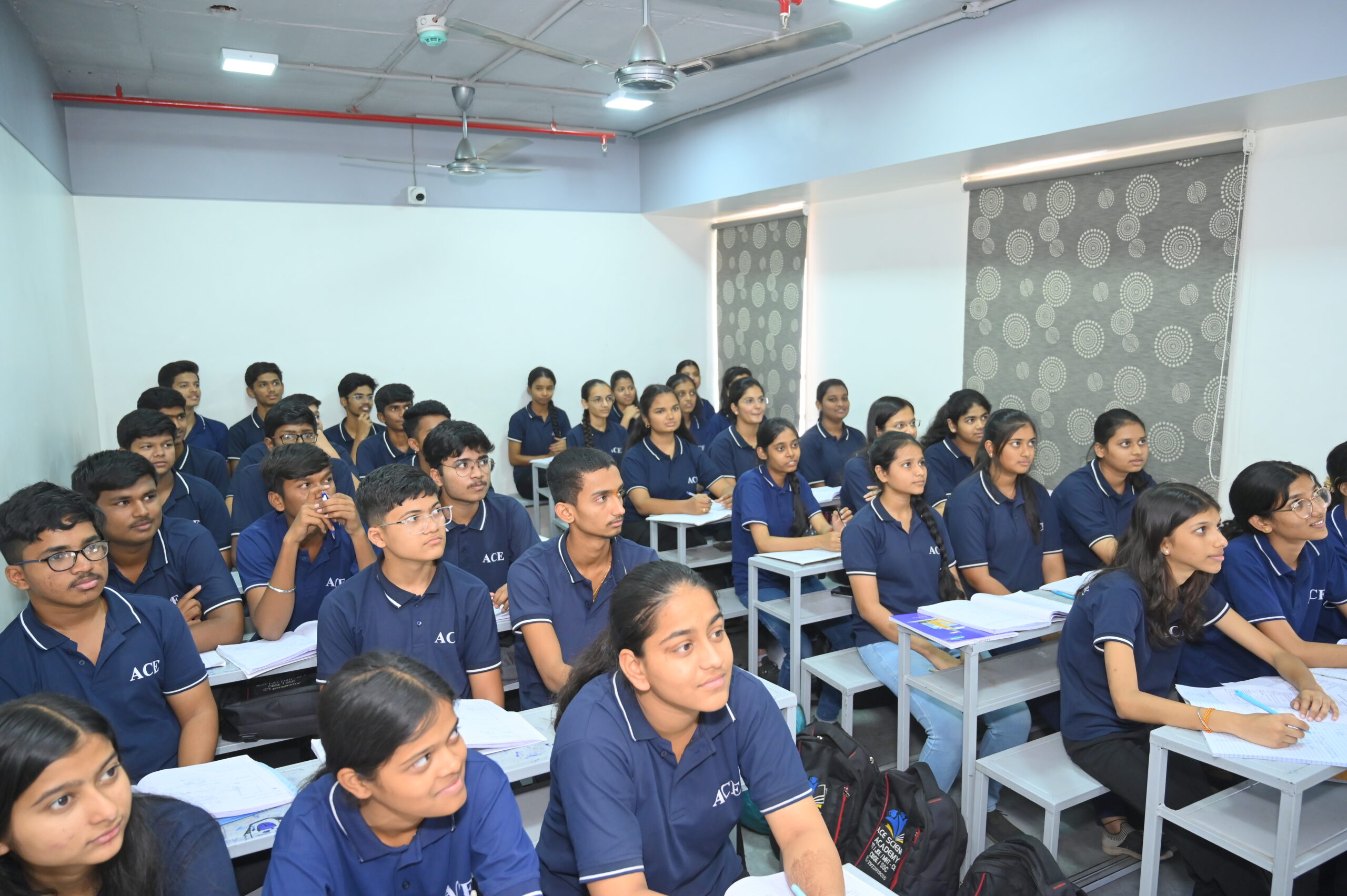
Cracking JEE 2027 requires dedication, discipline, and a smart strategy. With the right approach, consistent practice, and proper guidance, you can secure a top rank and get into your dream engineering college. Start early, stay focused, and keep improving every day; success in JEE is not just about hard work but also about working smart. At ACE Science Academy, we provide comprehensive classes for 11th and 12th-grade students to develop smart JEE aspirants for a sure shot success.
Frequently Asked Questions (FAQs)
Who will conduct JEE Main 2027?
Answer: JEE Main 2027 will be conducted by the National Testing Agency (NTA) for admission to undergraduate engineering courses. The exam is expected to be held in two sessions: January and April.
How to prepare for the JEE Main exam?
Answer: JEE preparation requires strong conceptual understanding along with application-based practice. Focus on problem-solving, regular practice, mock tests, and consistent revision to improve analytical skills.
When to start JEE Main exam preparation?
Answer: The ideal time to start JEE preparation is from Class 11th. This gives students enough time to cover the syllabus thoroughly and prepare simultaneously for board exams.